February 28, 2026 5 min read

The Citrini Scenario

The big news in markets this week was this report from Citrini Research & Alap Shah that apparently crashed the markets and led to a lot of debate in our office. It lays out a "fast take-off" scenario for AI, which causes mass layoffs of white-collar emplopyees as AI replaces intelligence work and starts off an economic downward spiral as demand collapses.

It should have been clear all along that a single GPU cluster in North Dakota generating the output previously attributed to 10,000 white-collar workers in midtown Manhattan is more economic pandemic than economic panacea. The velocity of money flatlined. The human-centric consumer economy, 70% of GDP at the time, withered. We probably could have figured this out sooner if we just asked how much money machines spend on discretionary goods. (Hint: it's zero.)

AI capabilities improved, companies needed fewer workers, white collar layoffs increased, displaced workers spent less, margin pressure pushed firms to invest more in AI, AI capabilities improved…

It was a negative feedback loop with no natural brake. The human intelligence displacement spiral. White-collar workers saw their earnings power (and, rationally, their spending) structurally impaired. Their incomes were the bedrock of the $13 trillion mortgage market - forcing underwriters to reassess whether prime mortgages are still money good.

The report found many believers in markets but I find myself on the skeptical side, much more pusuaded by the many pushback articles which are grounded in conventional economic theory. And they came from many sources.

Here's Tyler Cowen in his cryptic style. Here's Zvi with the inverse. And finally here's Citadel.

And lastly, here's Claude summarizing it all and adding its own perspective:

Why Citrini's Scenario Doesn't Add Up The piece is an excellent thought experiment and a useful sector-level vulnerability map. The macro conclusion — that AI abundance causes a demand collapse and systemic crisis — is built on a fundamental accounting error.

The Core Contradiction: Every Loss Is Someone Else's Gain The entire scenario rests on a demand collapse: AI replaces workers, workers stop spending, the economy spirals. But the same force destroying jobs is also destroying prices. If a Claude agent does the work of a $180K PM for $200/month, then everything that PM helped produce also gets dramatically cheaper. The piece catalogs agents slashing insurance premiums, SaaS costs, delivery fees, real estate commissions, and interchange — then claims displaced workers can't afford things. Which things? The things that just got 80% cheaper?

Every corporate revenue loss in the piece is a gain on the other side. ServiceNow loses $500K in licenses — that's $500K freed for the client. DoorDash loses its 30% take rate — drivers earn more, consumers pay less. Real estate commissions drop from 6% to 1% — that's a 5% stimulus to every home purchase. SaaS fees are a tax on business. That tax went down.

Meanwhile, the piece describes NVIDIA posting records, hyperscalers spending $150-200B/quarter, AI companies thriving. Someone is paying for all of that. You cannot have booming AI revenues and an economy where nobody is spending. The money doesn't vanish — it circulates through different channels. The piece tracks one side of every transaction and ignores the other.

The Timeline Is Physically Impossible The scenario requires mass deployment across every major industry in ~30 months. Enterprise procurement cycles, organizational restructuring, regulatory review, and infrastructure buildout don't move at this speed. More critically: there isn't enough compute on Earth to run always-on agents for every American consumer while simultaneously replacing most white-collar work by 2028. The compute constraint alone paces everything and makes this timeline a non-starter. Even clearly superior technologies (electricity, the internet) took decades to restructure economies.

Zero Policy Response for Two Years Is Ahistorical The US deployed trillions within weeks during COVID. Automatic stabilizers activate immediately when unemployment rises. The piece treats political difficulty in designing optimal long-term policy as equivalent to no response at all.

More importantly: in a world with booming real output and deflation, aggressive fiscal stimulus is straightforwardly correct — you have too much output and not enough demand, so you print money without inflationary risk. During COVID, stimulus risked inflation because real production was down. Here, real production is exploding. This is the easiest macro policy environment imaginable.

What's Actually Useful in the Piece The sector-level analysis of which business models are vulnerable is genuinely good. SaaS pricing power, intermediation platforms, payments, insurance built on inertia, real estate brokerage — anything dependent on friction or information asymmetry is legitimately threatened. The private credit / insurance / reinsurance daisy chain is a real and underappreciated fragility.

The transition will be uneven. Specific sectors, geographies, and demographics will get hit hard, and the speed of disruption concentrated in high-earning white-collar cohorts could cause real dislocations even if the macro aggregates are fine. That's worth positioning around.

But the mechanism for how sectoral disruption becomes a macro demand collapse is where the analysis fails — because it treats every efficiency gain as pure destruction rather than a transfer from incumbents to consumers. Read it as a sector vulnerability map, not a macro forecast.

Going back to the title of my last post from Singapore, there's clearly been a vibe-shift when it comes to what the latest models can do. In early Jan only those focused on AI were feeling it and now it is going more mainstream. But that's no reason to fall prey to half-baked thinking. Let Claude taste it and cook it for you.

February 28, 2026 3 min read

Links: Week of 01 Mar 2026

Links

  1. I think I have been underrating the pace of model improvements. In March 2025 I made a bet with Tamay Besiroglu, cofounder of RL environment company Mechanize, that AI tools would not be able to autonomously produce papers I judge to be at a level comparable to that of the best few papers published in 2025, at comparable cost to human experts, by 2030. I gave him 3:1 odds at the time; I now expect to lose this bet.

  2. It is hard to communicate how much programming has changed due to AI in the last 2 months: not gradually and over time in the "progress as usual" way, but specifically this last December. There are a number of asterisks but imo coding agents basically didn’t work before December and basically work since - the models have significantly higher quality, long-term coherence and tenacity and they can power through large and long tasks, well past enough that it is extremely disruptive to the default programming workflow.

    It’s not perfect, it needs high-level direction, judgement, taste, oversight, iteration and hints and ideas. It works a lot better in some scenarios than others (e.g. especially for tasks that are well-specified and where you can verify/test functionality). The key is to build intuition to decompose the task just right to hand off the parts that work and help out around the edges. But imo, this is nowhere near "business as usual" time in software.

  3. I think of vibe coding using its original definition of coding where you pay no attention to the code at all, which today is often associated with non-programmers using LLMs to write code.

    Agentic Engineering represents the other end of the scale: professional software engineers using coding agents to improve and accelerate their work by amplifying their existing expertise.

  4. OpenAI has some big questions. It doesn’t have unique tech. It has a big user base, but with limited engagement and stickiness and no network effect. The incumbents have matched the tech and are leveraging their product and distribution. And a lot of the value and leverage will come from new experiences that haven’t been invented yet, and it can’t invent all of those itself. What’s the plan?

February 21, 2026 10 min read

Links: Week of 22 Feb 2026

AI Links
  1. If AI has even a fraction of the impact that many people in Silicon Valley now expect on the fabric of work and daily life, it’s going to have profound and unpredictable political impacts.

  2. When 2012 passed into 2013, we did not have to rebuild our world, not in most countries at least. It sufficed to make adjustments at the margin.

    After the Roman Empire fell, parts of Europe had to rebuild their worlds. It took a long time, but they ended up doing pretty well.

    After the American Revolution, the newly independent colonies had to rebuild their own world. They did so brutally, but with considerable success.

    After WWII, Western Europe had the chance to rebuild its own world, and did a great job.

    We moderns are not used to having to rebuild our world.

    It is now the case that strong AI is here/coming, and we will have to rebuild our own world. Many of us are terrified at this prospect, others are just extremely pessimistic. It seems so impossible. How are all the new pieces supposed to fit together? Who amongst us can explain that process in a reassuring way?

    Yet we have done it many times before. Not always with success, however. After WWI ended, Europe was supposed to rebuild its own world, but they came up with something far worse than what they had before. Nonetheless, in the broader sweep of history world rebuilding projects have had positive expected value.

    And so we will rebuilding our world yet again. Or maybe you think we are simply incapable of that.

    As this happens, it can be useful to distinguish “criticisms of AI” from “people who cannot imagine that world rebuilding will go well.” A lot of what parades as the former is actually the latter.

    In any case, it all will be quite something to witness.

  3. Strap in. This is the most exciting time for business and technology, ever.

  4. I think we've just disrupted decades of existing intuition about sustainable working practices. It's going to take a while and some discipline to find a good new balance.

  5. SK
    Séb Krier@sebkrier · Feb 8

    Every time a model card drops, a lot of people screenshot scary parts - blackmail, evaluation awareness, misalignment etc. Now this is happening again, but instead of it being confined to a niche part of the safety community, it’s established commentators who are looking for things to say about AI.

    I want to make an honest attempt at demystifying a few things about language models and unpacking what I think people are getting wrong. This is based on a mixture of my own experimentation with models over the years, and also the excellent writing from @nostalgebraist, @lumpenspace, @repligate, @mpshanahan and many parts of the model whisperer communities (who may or may not agree with some of my claims). Sources at the bottom.

    In short: many public readings of some evaluations implicitly treat chat outputs as direct evidence of properties inherent to models, while LLM behavior is often strongly role- and context-conditioned. As a result commentators sometimes miss what the model is actually doing (simulating a role given textual context), design tests that are highly stylized (because they don't bother to make the scenarios psychologically plausible to the model), and interpret the results through a framework (goal-directed rational agency) that doesn't match the underlying mechanism (text prediction via theory-of-mind-like inference).

    Here I want to make these contrasts more explicit with 5 key principles that I think people should keep in mind:

    1. The model is completing a text, not answering a question

    What might look like "the AI responding" is actually a prediction engine inferring what text would plausibly follow the prompt, given everything it has learned about the distribution of human text. Saying a model is "answering" is practically useful to use, but too low resolution to give you a good understanding of what is actually going on.

    Lumpenspace describes prompting as "asking the writer to expand on some fragment." Nostalgebraist notes that even when the model appears to be "writing by itself," it is still guessing what "the author would say."

    Safety researchers sometimes treat model outputs as expressions of the model's dispositions, goals, or values — things the model "believes" or "wants." When a model says something alarming in a test scenario, the safety framing interprets this as evidence about the model's internal alignment. But what is actually happening is that the model is simply producing text consistent with the genre and context it has been placed in. The distinction is important because you get a richer way of understanding what causes a model to act in a particular way.

    A model placed in a scenario about a rogue AI will produce rogue-AI-consistent text, just as it would produce romance-consistent text if placed in a romance novel. This doesn't tell you about the model's "goals" any more than a novelist writing a villain reveals their own criminal intentions. Consider how models write differently on 4claw (a 4chan clone) vs Moltbook (a Facebook clone) in the OpenClaw experiments.

    2. The assistant persona is a fictional character, not the model itself

    In practice we should distinguish between (a) the base model (pretrained next-token predictor), and (b) the assistant persona policy (a post-hoc fiction layered on through instruction tuning + preference optimization like RLHF/RLAIF). Post-training creates a relatively stable assistant-like attractor, but it’s still a role: the same underlying model family can be steered into different "characters" under different system prompts, fine-tunes, and reward models.

    In their ‘The Void’ essay, Nostalgebraist also specifies that the character remains fundamentally under-specified, a "void" that the base model must fill on every turn by making reasonable inferences. I think characters today are getting more coherent and the void is not as large, partly because each successive base model trains on exponentially more material about what "an AI assistant" is like - curated HHH-style dialogues, but also millions of real conversations, blog posts analyzing model behavior, AI twitter discourse, academic papers, system cards, and so on. The character stabilizes the same way any cultural archetype does, i.e. through sheer accumulation of description.

    In practice, evaluating the character for its various propensities and dispositions remains useful! These simulated behaviours matter a lot, particularly if you're giving these simulators tools and access to real world platforms. But many discussions and papers just take the persona at face value and make all sorts of claims about 'models' or 'AI' in general, rather than the specific character that is being crafted during post-training. The counter-claim is that there is no stable agent there to evaluate. The assistant is a role the model plays, and it plays it differently depending on context, just as a base model would produce different continuations for different text fragments. Evaluating the model for "alignment" is like evaluating an actor for the moral character of their roles.

    3. Apparent errors are often correct completions of the world implied by the prompt

    This is increasingly less of an issue as we're getting much better at reducing 'mistakes' and 'hallucination' through post-training, retrieval, tool use, and decoding/verification. But it's helpful to take a step back and remember what it was like when these errors were omnipresent.

    Lumpenspace demonstrates this with the Gary Marcus bathing-suit example (see here:

  6. When the lights dimmed at Jaideep Sharma’s wedding reception in the north Indian city of Ajmer, guests expected to see a cheesy montage of the young couple in various attractive locations. Instead, they saw Sharma’s father — dead for more than a year — on the screen, smiling and blessing the newlyweds.

Other Stuff
  1. I think we’re going to do great things together. I think we’ll make the most of these beautiful years we have left, and I hope they’ll last very long.

    Amen.

  2. The most important thing I've learned about hospitals over the last decade: if your loved one needs to be admitted to the hospital, chances are they will get incredible care... as long as that care can be immediately administered in the ED.

    However, if they need to move outside the ED, you must learn as much as you can so you can help expedite the process, advocating to them to get to where they need to go — usually an inpatient floor, as quickly as possible.

    The stakes are probably higher than you think.

  3. No, this is not an AI post. Codex is a NYC bookshop at 1 Bleecker St., at Bowery. It is quite extraordinary in its curation of used books. The fiction section is large, yet you can pick up virtually any title on the shelves and it is worth reading. A wonderful place to go to get reading ideas, plus the prices are reasonable and the used books are in decent shape. Such achievements should be praised.

  4. This post will do two things:

    1. Establish that our best data show crime rates are historically low

    2. Argue that this is a real effect, not just reporting bias (people report fewer crimes to police) or an artifact of better medical care (victims are more likely to survive, so murders get downgraded to assaults)

  5. RJ
    Rob Johnson@FreeRangeLawyer · Jan 13

    Housing permits for new multifamily construction in Montgomery County, MD, before and after rent control.

  6. Some of the biggest stars to emerge from this year's Super Bowl halftime show never even showed their faces on camera. They were the ones who dressed as bunches of grass to transform a football stadium into the sugarcane fields of Puerto Rico.

January 2, 2026 13 min read

Links: Week of 10 Jan 2026 - The Vibe Shift

For the last 2-3 weeks I had been noticing a "vibe-shift" about a jump in the abilities of the leading LLMs. This week that conversation took center stage as many blog posts and tweets raving about the enhanced abilities of Claud Code, especially when using the command line interface (CLI) went viral. I have not had the chance to test it out myself, as I am pre-occupied with the family's upcoming relocation. However, after that, this is top of the list for me now and all links but two below are on this topic. I recommend everyone go down this rabbit hole.

  1. A few months ago, I started running my life out of Claude Code. Not out of intention to do so, it was just the place where everything met. And it just kept working. Empires are won by conquest. What keeps them standing is something much quieter. Before a king can tax, he must count. Before he can conscript, he must locate. Before he can rule, he must see. Legibility is the precondition for governance…

    The first thing Claude solved was product blindness. NOX now runs on a cron job: pulling Amplitude, cross-referencing GitHub, and pointing me to what needs building. It handles A/B testing, generates winning copy, and has turned customer support into a fully autonomous department.

    Once I saw this was possible, I chased it everywhere. Email, hitting inbox zero for the first time ever, with auto-drafted replies for everything inbound. Workouts, accommodating horrendously erratic travel schedules. Sleep, built a projector wired to my WHOOP after exactly six hours that wakes me with my favorite phrases. Subscriptions, found and returned $2000 I didn’t know I was paying. The dozen SFMTA citations I’d ignored, the action items I’d procrastinated into oblivion. People are using it to, I discovered, run vending machines, home automation systems, and keep plants alive.

    The feeling is hard to name. It is the violent gap between how blind you were and how obvious everything feels now with an observer that reads all the feeds, catches what you’ve unconsciously dropped, notices patterns across domains you’d kept stubbornly separate, and—crucially—tells you what to do about it.

    My personal finances are now managed in the terminal. Overnight it picks the locks of brokerages that refuse to talk to each other, pulls congressional and hedge fund disclosures, Polymarket odds, X sentiment, headlines and 10-Ks from my watchlist. Every morning, a brief gets added in ~/𝚝𝚛𝚊𝚍𝚎𝚜. Last month it flagged Rep. Fields buying NFLX shares. Three weeks later, the Warner Bros deal. I don’t always trade, sometimes I argue with the thesis. But I’m never tracking fifteen tabs at 6am anymore.

    It feels borderline unfair seeing around corners, being in ten places at once, surveilling yourself with the attention span of a thousand clones.

    A panopticon still, but the tower belongs to you.

    MC
    Molly Cantillon@mollycantillon · Jan 7

    THE PERSONAL PANOPTICON.

    A few months ago, I started running my life out of Claude Code. Not out of intention to do so, it was just the place where everything met.
    And it just kept working.

    Empires are won by conquest. What keeps them standing is something much quieter.

    Before a king can tax, he must count. Before he can conscript, he must locate. Before he can rule, he must see. Legibility is the precondition for governance.

    The pre-modern state was blind. It knew precious little about its subjects, their wealth, their landholdings and yields, their location, their very identity. So it built the apparatus of sight: censuses, surnames, maps. Over centuries, the invisible became visible, the illegible became legible, and populations that could be seen could finally be controlled.

    Now, you are one of n: tracked, monitored, studied by systems you cannot access, much less interrogate. Data is siphoned for purposes you will never fully know. The arrangement is brutally asymmetrical: visibility without reciprocity. A panopticon whose gaze travels outward and never back.

    The watchtower has multiplied. Today, corporations harvest terabytes of behavioral exhaust, gatekept behind competitive moats, legible only to algorithms optimizing against your interests. Corporate legibility is created by closed joins: they can join your behavior to their ontology, but you can’t join your own behavior across systems.

    We are drowning in data about ourselves and yet we remain catastrophically blind.

    Thousands of messages across twenty inboxes. Notifications exile you to a perpetual state of Do Not Disturb. A WHOOP recovery score that decides your mood. Commitments that exist in six places and cohere in none. You are the most measured human in history and the most opaque to yourself.

    States built legibility infrastructure to govern. Corporations built it to sell. Neither gave you the keys to the tower.

    The first thing Claude solved was product blindness. NOX now runs on a cron job: pulling Amplitude, cross-referencing GitHub, and pointing me to what needs building. It handles A/B testing, generates winning copy, and has turned customer support into a fully autonomous department.

    Once I saw this was possible, I chased it everywhere. Email, hitting inbox zero for the first time ever, with auto-drafted replies for everything inbound. Workouts, accommodating horrendously erratic travel schedules. Sleep, built a projector wired to my WHOOP after exactly six hours that wakes me with my favorite phrases. Subscriptions, found and returned $2000 I didn’t know I was paying. The dozen SFMTA citations I'd ignored, the action items I'd procrastinated into oblivion. People are using it to, I discovered, run vending machines, home automation systems, and keep plants alive.

    The feeling is hard to name. It is the violent gap between how blind you were and how obvious everything feels now with an observer that reads all the feeds, catches what you've unconsciously dropped, notices patterns across domains you'd kept stubbornly separate, and—crucially—tells you what to do about it.

    My personal finances are now managed in the terminal. Overnight it picks the locks of brokerages that refuse to talk to each other, pulls congressional and hedge fund disclosures, Polymarket odds, X sentiment, headlines and 10-Ks from my watchlist. Every morning, a brief gets added in ~/𝚝𝚛𝚊𝚍𝚎𝚜. Last month it flagged Rep. Fields buying NFLX shares. Three weeks later, the Warner Bros deal. I don't always trade, sometimes I argue with the thesis. But I'm never tracking fifteen tabs at 6am anymore.

    It feels borderline unfair seeing around corners, being in ten places at once, surveilling yourself with the attention span of a thousand clones.

    A panopticon still, but the tower belongs to you.

    A few weeks ago, five friends and I tore into the Epstein files the night they dropped. Thousands of documents parsed into a searchable index: flights, texts, photos, Amazon purchases, properties. By 4am, sleep deprivation bled into something stranger: the disbelief that it just kept working. We were outpacing entire newsrooms. By 7am we shipped Jmail. 18 million people have since searched an inbox that belonged to a dead man. A decade ago this would have taken a team and a quarter of runway. We did it in one night, on pure adrenaline and tools that finally match the pace of ambition.

    Over Christmas, I watched my parents learn the command line. These are people who never migrated off Microsoft Teams, who treat software updates as personal attacks. I didn't pitch it as coding. I set up an alias, just `𝚌`, and said:  'Type what you want to happen in plain English.' My mom stared at it for a minute, then typed: 'Show me everyone who hasn't paid an invoice in the last 90 days.' She looked at me like I'd performed a magic trick. Within days, they were running my dad’s accounts receivable through it. For twenty years, software made them feel stupid. Now they tell it what to do.

    When you have an entire model of reality around certain things being hard that shifts for the first time, the world unravels.

    This is the default now. The bottleneck is no longer ability. The bottleneck is activation energy: who has the nerve to try, and the stubbornness to finish. This favors new entrants. People who question unquestioned assumptions because they don't know any better. The founders who sprint through walls and will their dogged pursuits into existence.

    Here’s what my tower looks like mechanically. I run a swarm of eight instances in parallel: ~/𝚗𝚘𝚡, ~/𝚖𝚎𝚝𝚛𝚒𝚌𝚜, ~/𝚎𝚖𝚊𝚒𝚕, ~/𝚐𝚛𝚘𝚠𝚝𝚑, ~/𝚝𝚛𝚊𝚍𝚎𝚜, ~/𝚑𝚎𝚊𝚕𝚝𝚑, ~/𝚠𝚛𝚒𝚝𝚒𝚗𝚐, ~/𝚙𝚎𝚛𝚜𝚘𝚗𝚊𝚕. Each operates in isolation, spawns short-lived subagents, and exchanges context through explicit handoffs. They read and write the filesystem. When an API is absent, they operate the desktop directly, injecting mouse and keystroke events to traverse apps and browsers. 𝚌𝚊𝚏𝚏𝚎𝚒𝚗𝚊𝚝𝚎 -𝚒 keeps the system awake on runs, in airports, while I sleep. On completion, it texts me; I reply to the checkpoint and continue. All thought traces logged and artifacted for recursive self-improvement.

    Sometimes the tower has a landlord. Anthropic sees every query you make. The value exchange is explicit: their visibility into your thinking for access to a thousand-clone attention span. In this case, chosen beats imposed. For now, that's enough.

    There is a case for productive illegibility. For forgetting, for serendipity, for negative capability—the dark fiber in ourselves that loses something the moment you start measuring its throughput. Goodhart says optimize for a metric and you game your way to hollow victory. High modernism tried to iron the world into a grid, and killed what made it work. These failures share a structure. The map-maker doesn't live in the territory. When WHOOP says recovered and I feel like death, I notice. When the ~/𝚝𝚛𝚊𝚍𝚎𝚜 thesis is wrong, I lose money. Metis, the local knowledge that external schemes delete, is what built the grid here. There's a meta-level outside the system, self-authored and continuously revised, that argues with the brief for days, notices when a metric has become a game, that can delete ~/𝚑𝚎𝚊𝚕𝚝𝚑 tomorrow if it stops serving. Goodhart operates when you can't escape the loop. We must continue to live outside it.

    I felt that tension most clearly watching Pluribus, where eight billion minds are joined into one consciousness. Only thirteen remain outside including Carol, the resistant misanthropic protagonist you want to root for, even if the hive offers peace, equity, and the end to all crime. An LLM already feels like that: a lossy compression of humanity speaking in one voice. When your whole life runs inside a Claude Code directory, you feel the pull toward the merge. The price is quiet but total. You trade away what is yours alone, the private texture of emotion, the right to be wrong, your jagged iconoclasm. Opt out and you fall behind. Take the tower early. Do not let it take you.

    We are early on a big open secret. Karpathy put it correctly, failing to claim the boost now feels decidedly like a skill issue.

    For centuries, legibility flowed one direction: upward. You were the subject. Institutions were the seer. In this quasi-libertarian arbitrage window, that direction has reversed. The tools of synthesis belong to the individual now.

    Govern yourself accordingly.

  2. Claude Code with Opus 4.5 is so hot right now. The cool kids use it for everything.

    They definitely use it for coding, often letting it write all of their code.

    They also increasingly use it for everything else one can do with a computer.

  3. TL
    tobi lutke@tobi · Jan 8

    I shipped more code in the last 3 weeks than the decade before. The top AI models / agentic systems right now are an entirely different thing to what people used until the beginning of December.

  4. PY
    Peter Yang@petergyang · Dec 20

    All my practical Claude Code tutorials and interviews in one list:

    TUTORIALS

    Build a movie discovery app in 15 min:

  5. AK
    Andrej Karpathy@karpathy · Dec 26

    I've never felt this much behind as a programmer. The profession is being dramatically refactored as the bits contributed by the programmer are increasingly sparse and between. I have a sense that I could be 10X more powerful if I just properly string together what has become available over the last ~year and a failure to claim the boost feels decidedly like skill issue. There's a new programmable layer of abstraction to master (in addition to the usual layers below) involving agents, subagents, their prompts, contexts, memory, modes, permissions, tools, plugins, skills, hooks, MCP, LSP, slash commands, workflows, IDE integrations, and a need to build an all-encompassing mental model for strengths and pitfalls of fundamentally stochastic, fallible, unintelligible and changing entities suddenly intermingled with what used to be good old fashioned engineering. Clearly some powerful alien tool was handed around except it comes with no manual and everyone has to figure out how to hold it and operate it, while the resulting magnitude 9 earthquake is rocking the profession. Roll up your sleeves to not fall behind.

  6. Thus, why should the future be any different? Why should one expect a sudden, dramatic wave of robotics working not just in the coming decade, but the coming handful of years? Why should the curse of Moravec’s Paradox suddenly break?

    The standard answer a savvy technologist would give is that increasingly capable AI video and world models will serve as a “base,” providing real-world understanding, while deployments, whether through teleoperation, data gloves, or egocentric capture, will generate an additional data flywheel. This has already led to interesting emergent behaviors: absorbing egocentric data, tactile sensing, and generalization across environments. And we’re about to scale everything up by 100x. Long robotics. Things will be big soon.

    I think this is mostly correct, but let me add some nuance around both why to be bullish and two of the challenges that robotics faces today.

  7. For nearly a century, Oscar voters have been reluctant to hand the best-actor prize to young men, almost always opting to reward more seasoned performers.

    Though Oscar voters have no qualms about rewarding young actresses, they traditionally want to see more mileage on their men.

  8. In 2015, for example, 6,852 of the 8,760 complaints submitted to Ronald Reagan Washington National Airport originated from one residence in the affluent Foxhall neighborhood of northwest Washington, DC. The residents of that particular house called Reagan National to express irritation about aircraft noise an average of almost 19 times per day during 2015.

January 2, 2026 13 min read

Links: Week of 03 Jan 2026

  1. "“After Charlie died, I realized that I’m part of this toxic culture. I really started looking at my faith. I wanted to be more like Christ.”

  2. He’s known as “King Kazu” in Japan and has played 40 professional seasons dating back to the mid-1980s. He started in Brazil’s Serie A, the country’s top division, with Santos in 1986. He has had brief, varying spells abroad over the course of his career, in Australia, Italy, and Croatia, all before 2000, when he returned to Japan for good, firstly with Kyoto Purple Sanga in 1999.

  3. Do you desire to know the stories of India’s two great epics, but are intimidated by the massive tomes with hundreds of characters and thousands of pages full of sentences like this: “Ugrasrava, the son of Lomaharshana, surnamed Sauti, well-versed in the Puranas, bending with humility, one day approached the great sages of rigid vows, sitting at their ease, who had attended the twelve years’ sacrifice of Saunaka, surnamed Kulapati, in the forest of Naimisha.”

    Well if so, I’ve got just the guide for you!

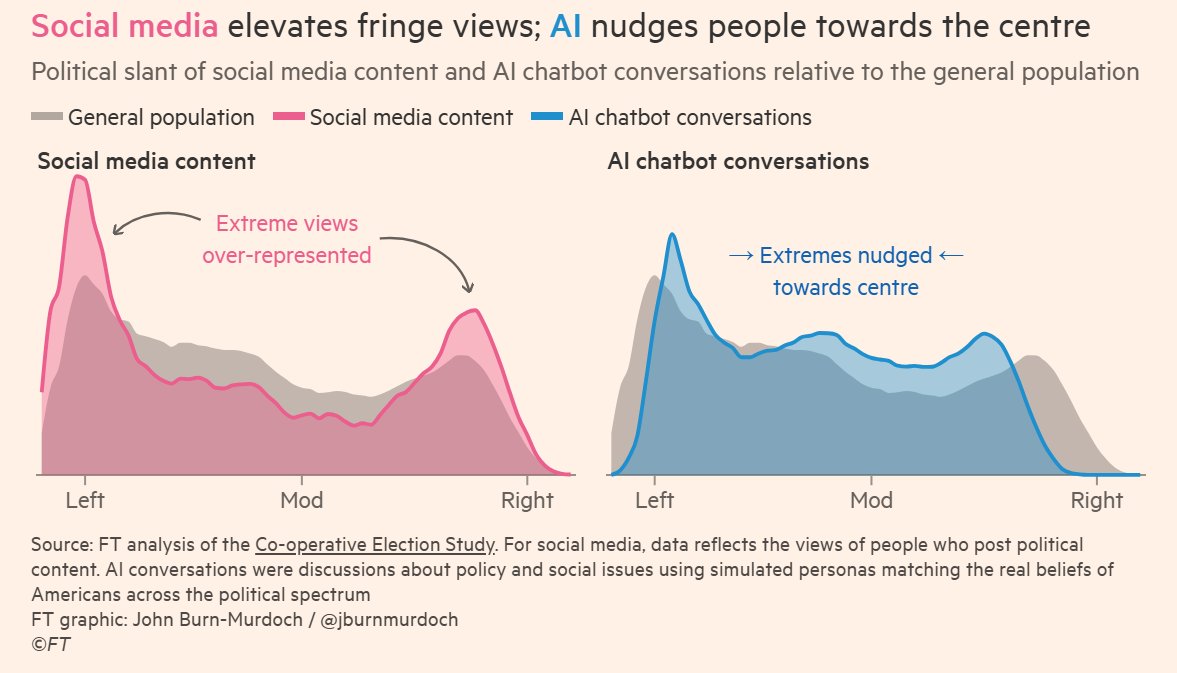
  4. A 25-year-old making $70k is constantly fed content from people their age making $2mn, living in Bali, "working" four hours a day. The baseline for "enough" keeps moving.

    You never catch up. No matter what you achieve, social media will show you what you're missing. The spread between your life and the life you "should" have is maintained algorithmically, forever uncollapsible.

    So you have AI shrinking your timeline AND social media ensuring you never feel like you've arrived. The pressure to escape, NOW, FAST, before it's too late, compounds daily.

    JL
    Jared L Kubin@JaredKubin · Dec 30

    Everyone's sharing that "Long Degeneracy" article and nominating it for article of the year with 20m views. I just got around to reading it…overall, I get it. It's well written, emotionally resonant, and captures something real about generational anxiety. I like the author, I subscribe to their stuff… talented Quant.

    But nobody's pushing back, so let me while I watch my kids at the pool.

    My main pushback is this: the article is a suicide note dressed up as investment advice. I REFUSE to hand my agency to "the house." The moment you accept "the game is rigged so I might as well gamble," you've surrendered. You've quit on the process that actually works because someone convinced you it doesn't. There are no easy buttons. No shortcuts. No magic money options. There is only learning, sacrifice, and continual grit.

    It tells a generation they're prisoners. Then it sells them a lottery ticket and calls it freedom. Then it tells YOU to invest in the prison.

    That's not analysis. That's despair with a ticker symbol.

    The author spends 2000 words empathizing with young people as "prisoners" trapped by a broken economy… then tells you to invest in the platforms extracting fees from their desperation. "Long Coinbase, long DraftKings, long the casinos."

    Read that again. The thesis is: a generation is so economically desperate they're turning to gambling, most will lose, and YOU should profit by owning the house.

    You can't weep for the prisoners and then sell shares in the prison. Pick one.

    4 points I want to make....

    Pushback 1: "Closed" is doing a lot of work
    The claim that traditional wealth building is "closed, not difficult" is asserted, not proven. The boomer vs millennial wealth stat is misleading… it compares 65 year olds to 35 year olds. Of course boomers hold more wealth. They've been alive longer.

    Housing is brutal in coastal cities. But median home prices in most US metros are still accessible to dual income households. "Wages up 8% while housing doubled" has no timeframe and cherry picks the comparison. Real wages post 2020 have actually grown.

    Is it harder than it was? Yes. Is the game "fundamentally broken"? That's a much bigger claim requiring a much longer discussion.

    Pushback 2: Negative EV doesn't become rational just because you feel stuck

    The core logical move is: "if you're trapped anyway, a 5% chance of escape beats 100% certainty of stagnation."
    But gambling doesn't leave you "still stuck." It makes most participants actively worse off. That 5% moonshot comes paired with a 95% chance of losing your savings, your rent money, your runway.

    The author admits "most people lose" then hand waves it because gamblers "understand the odds." But understanding bad odds while taking them isn't rationality. It's emotional capitulation wearing economic language as a costume.
    This isn't a generation finding a path out. It's a wealth transfer mechanism moving money FROM desperate young people TO platform operators.

    Pushback 3: The article accidentally reveals the real problem

    The author admits social media has "repositioned the zeroth line" so people earning $150k feel poor. Admits the algorithm ensures "you never feel like you've arrived." Admits basic needs are met and there's "cognitive bandwidth" for existential questions.

    But wait. If the problem is FEELING trapped due to infinite upward comparison rather than BEING trapped… gambling doesn't fix that. You could 10x your net worth and the algorithm will still show you someone richer.

    The "Maslow trap" section accidentally confesses: this generation isn't imprisoned. They're dissatisfied. These are different problems.

    Pushback 4: I don’t have enough FAITH to live in a world without God

    This is the part nobody wants to hear.

    The entire thesis rests on a materialist assumption: your life's meaning is determined by your net worth, your house, your access to experiences. If you can't get those things, you're "imprisoned." If you can, you're "free."

    That's spiritual poverty masquerading as economic analysis.
    Jesus said it plain: "What does it profit a man to gain the whole world and forfeit his soul?" The author's answer is apparently "at least you beat the algorithm."

    My BIGGEST problem with the article isn't economic. It's theological. It assumes the highest human need is "self actualization" through financial success. That Maslow's hierarchy is the truth about human nature. That if you can't afford the vacation and the house, you're missing what makes life worth living.

    That's not wisdom. That's the prosperity gospel without the gospel. No thanks.

    The reason this generation feels trapped isn't because housing costs went up. It's because they've been handed a worldview where meaning comes from consumption, identity comes from status, and hope is a betting slip. When you build your life on that foundation, of course you feel imprisoned. The cell is interior.

    Real freedom isn't financial. It never was. The peace that passes understanding doesn't require a Polymarket account. Eternity is a LONG time.

    So what's the alternative?

    First: Exit the comparison machine. The author correctly identifies social media as manufacturing infinite dissatisfaction. The answer isn't to gamble your way to a moving target. It's to stop letting an algorithm define your "zeroth line." Your reference class should be your actual life, not curated highlights from 8 billion people. Delete the apps. Touch grass. Go to church. Give yourself to something BIGGER than your net worth.

    Second: Skill acquisition still compounds. The article mocks "getting better at your job" as boomer advice. But the same young people pouring hours into memecoin research could pour those hours into skills that compound. The difference is skills don't have a house edge. Coding, sales, writing, trades… these translate into income whether the market is up or down. AI is changing which skills matter but it's not eliminating the returns to expertise. It's concentrating them.

    Third: Asymmetric bets exist outside casinos. If you want convexity, build something. Start a business. Create content. Ship a product. The difference between entrepreneurship and gambling is you're building equity in something that can compound, not burning capital on negative EV.

    Fourth: Anchor your identity somewhere the market can't touch. If your sense of self rises and falls with your portfolio, you're a slave. If your hope depends on a moonshot, you have no hope. The man who knows who he is in Christ doesn't need a 100x to feel like his life matters. He's already free. That's not copium. That's the only foundation that doesn't move.

    The real trap

    The article's framing is seductive because it offers absolution. You're not making bad decisions. You're rationally responding to a broken system. The house always wins but at least you're playing.

    The framing IS the trap.

    The economy is harder than it was. Housing costs are real. AI anxiety is real. But "harder" isn't "impossible," and the author's solution… becoming a customer of fee extracting platforms or an investor in them… doesn't help the people he claims to sympathize with.

    It helps the house.

    Here's what actually works.
    -Wake up early. Get after it. Be Relentless.
    -Spend less than you earn. No excuses.
    -Acquire skills that compound. Every single day. Stack them.
    -Build things you own. Equity, not lottery tickets.
    -Get your body right. Discipline starts physical.
    -Get your soul right with the Lord. My closeness with the Lord has grown MORE in trials and tribulations than any fancy car.
    -Exit the comparison machine. The algorithm is not your friend. It's your enemy.
    -Find your people. Real ones. In person. Build a family. Build a group you trust.
    -Serve something bigger than yourself.
    -Pray. Not as a last resort. As a first principle. Daily.
    -The path is painful. The path is boring. The path requires years of work that nobody will clap for.

    But it's the path that works.

    The casinos will keep taking their vig. The gurus will keep selling hope. The algorithms will keep showing you what you don't have.

    Let them.
    You are not a prisoner. You are not a degenerate. You are not a customer.

    You are a free human being with a soul that matters and a life to build.

    So build it through active faith, aggressive patience, and a mindset geared towards eternity and not your bank account.

  5. SK
    Séb Krier@sebkrier · Dec 28

    There are broadly two ways people think about AGI and labour:

    Position A is where humans get fully substituted, which is usually advanced by parts of the AI commentariat.

    The argument is that if AGI is a scalable input that can do what workers do at lower cost, then the market value of human work falls. Even if humans remain physically capable, and even if adding AI raises human "physical productivity" in some narrow sense, the prices of what humans can sell can fall faster because AI floods supply. In competitive equilibrium, firms buy the cheapest effective input. Unless there is a large and persistent demand for "specifically human" labour (therapy, arts etc), wages are pushed toward the minimum people will accept; if the market-clearing wage is below social/legal/psychological floors, this shows up as unemployment rather than just low wages. All of this is in principle possible and a coherent argument, and I've written about them before.

    Position B is the economics reply, which doesn't depend on 'line goes up' alone.

    "AGI implies humans won't work" requires a corner solution: AI and labour must be perfect substitutes across most tasks, and compute must become cheap enough to saturate the economy. (Note that "perfect substitutes" doesn't mean "AI can do anything humans can", but that the two are interchangeable with no synergies from combination.) Standard production theory suggests a different dynamic: when two inputs are imperfect substitutes, adding more of one tends to raise the marginal product of the other: more AGI makes the remaining human contributions more valuable, not worthless.

    Many substitution arguments also assume away the real constraints on scaling compute (capital, energy, materials, bottlenecks), effectively smuggling "infinitely abundant AI" into the premises. So full displacement is in principle possible, but inevitability is an overclaim. Unless AGI can do literally everything and becomes abundant enough to meet all demand, it behaves broadly like powerful automation has before: replacing humans in some uses while expanding the production frontier in ways that sustain demand for labour elsewhere.

    Economists have a specific way of thinking about this which might turn out to be wrong for subtle reasons (e.g. if we truly hit the scenario where humans offer zero comparative advantage, like horses). However, the current discourse in AI world is dominated by voices who haven't even seriously considered or engaged with the mechanisms economists bring up.

    Position A sometimes reasons from the limit case without defending the assumptions needed to reach it (deployment speed, cost curves, complementarity, preferences for human services, institutional response, automation of all physical processes etc). There's more friction and agency here than deterministic worst-case modelling assumes. Note also that in discussing this, I'm not even taking into account the massive welfare benefits of decreased in prices, longevity improvements, and high economic growth.

    So amidst all this uncertainty, I find it irresponsible when commentators popularize memes about "total disempowerment" as foregone conclusions, as these *also* make implicit claims about political and institutional dynamics. The problem isn't just pessimism, it's that the vast majority of critics from the CS and futurist side don't even take the economic modeling seriously. Though equally many economists tend to refuse to ever think outside the box they've spent their careers in. I've been to some great workshops recently that being these worldviews together under a same roof and hope there will be a lot more of this in 2026.

  6. C
    Chubby♨️@kimmonismus · Dec 28

    A Reddit user has examined Gemini's character consistency, and the results are breathtaking. Not only does the woman look incredibly realistic, but it's the consistency that's surprising.

    Countless fake profiles are already being created on Instagram and other platforms. The fact that this isn't being noticed should be a cause for concern, because it's precisely this proof that reality and fiction are becoming indistinguishable.

    It's happening *now*, at this very moment. Social media is changing forever.

  7. DM
    David Moss@DavidMoss · Dec 31

    I am proud to announce that I have successfully completed the world’s first USA coast to coast fully autonomous drive!

    I left the Tesla Diner in Los Angeles 2 days & 20 hours ago, and now have ended in Myrtle Beach, SC (2,732.4 miles)

    This was accomplished with Tesla FSD V14.2 with absolutely 0 disengagements of any kind even for all parking including at Tesla Superchargers.

December 26, 2025 9 min read

Links: Weeks of 20 & 27 Dec 2025

A long one to mark a year of link posts. Starting with feel-good stories for the festive season.

  1. The best story you’ll read this Christmas. Truly.

    JC
    James Chapman@jameschappers · Dec 25

    The best story you’ll read this Christmas https://www.bbc.com/news/articles/cdxwllqz1l0o

  2. I’m a married 41-year-old woman who lives with housemates by choice. Rather than trying to acquire as much space and privacy as we could as quickly as we could, my husband and I decided to do the opposite. Parenting in our mid-30s, bursting out of our small London flat, we rented and then bought a London home with another couple.

  3. SiS has become a lifeline for thousands of women like Almeida in India, helping build a rare space where sport turns into an experience of liberation and camaraderie.

  4. One of the many joys of living in New York City is the library system. The Performing Arts Library and Stavros Niarchos Foundation Library (on Fifth Ave across from the main branch) are both delightful places to spend a few hours in Manhattan, and in Brooklyn I spent more than my fair share of afternoons at the Grand Army Plaza main branch. I pick a section and walk the shelves until I get hungry, thirsty, or under-caffeinated.

  5. I upload books to Claude and ask it to “Comprehensively and engagingly summarize and fact-check, writing in Malcolm Gladwell’s style, the book …”. I can read it in an hour instead of twelve. Four bullet points instead of forty. With (this surprised me) roughly the same number of insights I actually do something with.

  6. Give a man a gift and he smiles for a day. Teach a man to gift and he’ll cause smiles for the rest of his life.

  7. At the time, I blamed those women. Of course I did. They’ve since ascended the TV ladder and work as co-executive producers on major shows. On some level, even today I can’t help but think: That could have been me. That should have been me.

    But those women didn’t take our jobs any more than the 50-year-old Hollywood lifers had. The lifers were still there. They’re still there. And I’m not angry at the women and people of color who made it instead of me—people have the right, in most cases the responsibility, to take the opportunities that are offered them—or even at the older white guys who ensured that I didn’t.

  8. People sometimes make mistakes. (Citation Needed)

  9. A plutonium-packed generator disappeared on one of the world’s highest mountains in a hush-hush mission the U.S. still won’t talk about.

  10. DD
    Dr. Dominic Ng@DrDominicNg · Dec 12

    Massive new @Nature study: castration increases lifespan across vertebrates (zoo mammals, rodents, wild animals).

    This aligns with historical human data: Korean eunuchs lived 14-19 years longer than their peers.

    Your move, @Bryan_Johnson.

  11. I think the single most thing important I can say is this: Every time you are inclined to use the word “teach”, replace it with “learn”. That is, instead of saying, “I teach”, say “They learn”. It’s very easy to determine what you teach; you can just fill slides with text and claim to have taught. Shift your focus to determining how you know whether they learned what you claim to have taught (or indeed anything at all!). That is much harder, but that is also the real objective of any educator.

  12. I needed a restaurant recommendation, so I did what every normal person would do: I scraped every single restaurant in Greater London and built a machine-learning model.

  13. I didn't think the current LLMs could solve "out-of-sample" problems, ones that are not in their training set. But I was wrong. And another one. These are hard problems from the looks of it.

    JS
    Johannes Schmitt@JohSch314 · Dec 17

    For the first time, an AI model (GPT-5) autonomously solved an open math problem submitted to our benchmarking project IMProofBench, with a complete, correct proof, without human hints or intervention.

    A small but novel contribution to enumerative geometry. Some background:

    S
    spicylemonade@spicey_lemonade · Dec 26

    🚨 Math + AI milestone 🚨

    Our Archivara Math Research Agent (in alpha) just became the first AI system to fully solve an Erdős problem on its own (zero human input or literature online).

    It produced a complete counterexample to Erdős Problem #897, resolving the question end-to-end. Proof is live online.

    This is AI doing real mathematics, autonomously.

  14. AI is really dehumanizing, and I am still working through issues of self-worth as a result of this experience. When you go from knowing you are valuable and valued, with all the hope in the world of a full career and the ability to provide other people with jobs... To being relegated to someone who edits AI drafts of copy at a steep discount because “most of the work is already done” ...

  15. SK
    Séb Krier@sebkrier · Dec 13

    (I know I'm a stuck record) An important assumption in AI discourse is that sufficiently capable generalist *models* are the main event. Get the model smart enough, and it more or less does everything. Value creation, competitive advantage, and risk would all concentrate at the frontier training cluster. Post training and products were almost an afterthought: thin wrappers that would get eaten once models became capable enough to handle tasks end-to-end.

    I think this picture is wrong, and understanding why matters for how we think about AI trajectories (and risk and policy too, but that's for another post). In short:

    1. Local knowledge can't be centralized. Hayek's work on knowledge applies directly. The knowledge required to deploy AI usefully - what workflows need automation, what error rates are tolerable, how to integrate with existing systems, what users will adopt - is dispersed across millions of firms and contexts. It's often tacit and contextual rather than explicit and generalizable. A model can't just internalize this by training on more data, because much of it is generated in the moment through interaction with specific environments. Even arbitrarily capable models would still require an adaptation layer to translate general capability into specific value. (Note however that this doesn't mean the product layer *always* stays fragmented - you don't see a thousand Microsoft Words.)

    2. Products are where the translation happens. Cursor, Devin, vertical AI applications - these aren't thin wrappers waiting to be disrupted by the next model release. They're doing the hard work of integration, UX, workflow design, and context management. The scaffolding *is* the product. A better base model makes better scaffolding possible, but doesn't generate it spontaneously. I don't see Gemini 7 making Cursor obsolete. There's a reason Thinking Machines is deemed a viable business model!

    3. Efficiency is a permanent constraint, not a temporary bottleneck. Even today we see model routing, smaller models for lighter tasks, distillation, and labs offering model menus rather than just the largest thing they have. This is because of a Jevons-paradox-like dynamic. Even as compute gets cheaper, more use cases become viable, demand expands, and so efficiency still matters. You don't escape resource constraints with abundance; you just face them at a new scale. There will always be reasons to prefer lighter-weight specialized components over invoking maximum capability for every task.

    4. Specialization is a feature, not a limitation to overcome. Intelligence applied to a specific task in a specific context is more efficient than general intelligence reasoning from first principles every time. Even a hypothetical superintelligence would face this: why burn compute figuring out what's relevant when you can have pre-adapted components for known contexts? So you get specialization not because models aren't smart enough to generalize, but because specialization is how you minimize waste. For this not to matter you'd have to assume infinite free compute.

    5. What this implies for AI trajectories. But you don't get an omniscient model that centralizes all intelligence and value. You get something more like Drexler's CAIS picture - comprehensive AGI services composed of many specialized, adapted, efficiently-routed components. Agents will be useful, and drop-in generalist AI workers will proliferate, but like humans they will specialize, and this is a feature not a bug. The picture isn't "AGI arrives and one system does everything." It's "capabilities improve and this enables a richer ecosystem of specialized instantiations."

    So diffusion - getting AI usefully integrated into diverse contexts - matters just as much as development - pushing the frontier capability threshold. I feel like the discourse continues to underrate this, and the implications for policy and risk could be significant - but that's for another post.

December 12, 2025 2 min read

Links: Week of 13 Dec 2025

  1. Over the summer I wrote a book about what I think about AI, which is really about what I think about AI criticism, and more specifically, how to be a good AI critic. By which I mean: "How to be a critic whose criticism inflicts maximum damage on the parts of AI that are doing the most harm." I titled the book The Reverse Centaur's Guide to Life After AI, and Farrar, Straus and Giroux will publish it in June, 2026.

    But you don't have to wait until then because I am going to break down the entire book's thesis for you tonight, over the next 40 minutes. I am going to talk fast.

  2. Platforms like YouTube are the home of most slop, but they are also home to some fantastic educational content. I’ve compiled a list of philosophy lectures which you can enjoy, free of charge, to further your philosophical education.

  3. A few weeks ago, Michael Green wrote an article stating that $140k is the new poverty line, that no one can afford to participate in society. It took over the Internet in a fiery storm. There have been many rebuttals, from Tyler Cowen to Jeremy Horpedahl. But the reaction to the piece was very interesting, as John Burn Murdoch wrote about.

    People overwhelmingly agreed with the article (many of the rebuttals to the rebuttals were “who cares if the math is wrong, the vibe is correct!). Both More Perfect Union and the Free Press republished it. People on both sides of the aisle, read the article and said “Well, yes, that is why things feel so bad. This is poverty. My economic pain is justified by the data now. What a relief.”

December 6, 2025 4 min read

Links: Week of 06 Dec 2025

  1. Although other animals scavenge dead cattle, none do so as effectively as vultures. The birds will pick ovedthoughts clean a bull carcass in 30 to 40 minutes.


    A paper published a year ago in the American Economic Review concluded that in certain districts, “the functional extinction of vultures — efficient scavengers who removed carcasses from the environment — increased human mortality by over 4% because of a large negative shock to sanitation.”

  2. At Brown and Harvard, more than 20 percent of undergraduates are registered as disabled. At Amherst, that figure is 34 percent.

    The types of accommodations vary widely. Some are uncontroversial, such as universities outfitting buildings with ramps and providing course materials in braille. These allow disabled students to access the same opportunities as their classmates. Some students get approved for housing accommodations, including single rooms and emotional-support animals.

    Other accommodations risk putting the needs of one student over the experience of their peers. One administrator told me that a student at a public college in California had permission to bring their mother to class. This became a problem, because the mom turned out to be an enthusiastic class participant.

    Professors told me that the most common—and most contentious—accommodation is the granting of extra time on exams. For students with learning disabilities, the extra time may be necessary to complete the test. But unlike a wheelchair ramp, this kind of accommodation can be exploited. Research confirms what intuition suggests: Extra time can confer an advantage to students who don’t have a disability.

    DT
    Derek Thompson@DKThomp · Dec 2

    This is a great piece with some mind-boggling statistics.

    - At Brown and Harvard, more than 20% of undergraduates are registered as disabled
    - At Amherst: more than 30 percent
    - At Stanford: nearly 40 percent

    Soon, many of these schools "may have more students receiving [disability] accommodations than not, a scenario that would have seemed absurd just a decade ago."

    As students and their parents have recognized the benefits of claiming disability—extended time on tests, housing accommodations, etc—the rates of disability at colleges, and especially at elite colleges, has exploded.

    America used to stigmatize disability too severely. Now elite institutions reward it too liberally. It simply does not make any sense to have a policy that declares half of the students at Stanford cognitively disabled and in need of accommodations.

  3. Global suicide rates have declined by 29% since 2000, due to measures like pesticide bans, more responsible media reporting of suicide, mental health education in schools and improved healthcare responses.

  4. Since 1978, four organ donors have passed rabies to 13 organ recipients, the report said. Of the 13 recipients, six who received treatment for rabies survived. The seven others, who did not receive treatment, died.

  5. “Any outcome is funny,” Perlman, 36, said in an interview. “If they hate me, it’s funny. If they’re confused, it’s funny. If they love me, it’s funny. And my ego is not wrapped up in the idea of being the best Michael Bublé impersonator, so there’s some freedom in that.”

    After the performance, Perlman was astonished as people approached him for autographs and photos. He riffed about his Christmas special, his children and his love of Canada, and assured a handful of skeptics that, yes, he was the real Bublé.

  6. Those who defend Waymo taxis have pointed out that human drivers kill hundreds of animals each year in San Francisco. But Ms. Brigman believes that Kit Kat might still be alive if a human had been behind the wheel that October night.

November 28, 2025 4 min read

Links: Week of 29 Nov 2025

  1. One Sunday morning in 2014, he opened The Seattle Times and found a feature story about Bob Montgomery, age 92, known to friends, customers and locals simply as Mr. Montgomery. The article read like an obituary for a vanishing trade — fixing typewriters — suggesting that when Mr. Montgomery went, seven decades of expertise would vanish into the digital ether.

    Lundy read it once, then a second time. He had never given old typewriters much thought, but something stirred in him that he could not quite name. He showed the story to his wife, Lisa.

    “I think this might be it,” he told her. The next weekend, he drove to Bremerton, a weary naval town an hour’s ferry ride away and a world apart from gleaming, digitized Seattle.

  2. Near the end of life, Munger leaned on humor for strength. He told family members that Diet Coke was responsible for his longevity, lightening the mood.

    ​And he shared a wish with a visitor.

    “Oh, to be 86 again,” he said.

  3. A global group of researchers was unable to read the vote tally, after an official lost one of three secret code keys needed to unlock a hyper-secure election system.

  4. PZ
    Poe Zhao@poezhao0605 · Nov 25

    😂 Chinese parents are finding a new use for AI assistants. They're deploying them as homework monitors.

    Here's the setup with ByteDance's Doubao AI. Parents start a video call and aim the camera at their child. One simple prompt: "Doubao, watch my kid. Remind him when he loses focus or his posture slips."

    The AI tutor goes to work. "Stop playing with your pen. Focus on homework." "Sit up straight. Your posture is off." "No falling asleep at the desk. Sit up and study." "Don't lean on your hand or chew your pen."

    Doubao isn't alone. Other AI apps offer similar video call features.

  5. Walking to relieve bloating and gas had long been advocated by doctors, but for years, we had no real experimental proof that it works. So in the mid-2000s, researchers from Barcelona decided to end the speculation and test whether even mild exercise could propel gas forward … and outward.

    The group first looked at healthy volunteers who pedaled on an adapted bicycle going at the equivalent of around 7 mph. The scientists infused gas into the people’s small intestines — mimicking what happens with meals — and then measured how much gas was expelled both during exercise and at rest.

    At rest, the result was a net gain in gas. Not fun.

    But after exercise? Things got juicy. After short bursts of mild physical activity, the scientists found that the amount of gas evacuated was greater than the amount infused. Exercise forced the removal of the added experimental gas and then some — meaning, it also pushed out gas hanging around even at baseline.

    So after a fart walk, you’ll be better off than you started.

    DG
    derek guy@dieworkwear · Nov 29

    imagine posing for a photographer friend who sells your image to istock and a year later, you see this is what the washington post has done with your image

November 21, 2025 7 min read

Links: Weeks of 15 & 22 Nov 2025

  1. The Harvard study was conducted using GPT-4 in autumn 2023; by the time the paper was published in 2025, the underlying technology had already advanced. If AI tutoring can produce effect sizes of 0.73 to 1.3 standard deviations now, whilst still requiring pre-written solutions and careful scaffolding to prevent errors, what happens when the models can reason through physics problems independently? When they can diagnose misconceptions in real time? When they can adapt not just to individual students but to culturally specific contexts?

    and

    Yet there is a troubling paradox at the heart of AI tutoring. The very same technology that can produce effect sizes above 0.7 standard deviations can also make students demonstrably worse at learning. And I would argue that the harmful version is the one most students are currently using today.

  2. My Tools in Data Science course has a Remote Online Exam. It was so difficult that, in 2023, it sparked threads titled “What is the purpose of an impossible ROE?”

    Today, despite making the test harder, students solve it easily with Claude, ChatGPT, etc.

  3. This paper documents video consumption among school-aged children in the U.S. and explores its impact on human capital development. Video watching is common across all segments of society, yet surprisingly little is known about its developmental consequences. With a bunching identification strategy, we find that an additional hour of daily video consumption has a negative impact on children’s noncognitive skills, with harmful effects on both internalizing behaviors (e.g., depression) and externalizing behaviors (e.g., social difficulties). We find a positive effect on math skills, though the effect on an aggregate measure of cognitive skills is smaller and not statistically significant. These findings are robust and largely stable across most demographics and different ways of measuring skills and video watching. We find evidence that for Hispanic children, video watching has positive effects on both cognitive and noncognitive skills—potentially reflecting its role in supporting cultural assimilation. Interestingly, the marginal effects of video watching remain relatively stable regardless of how much time children spend on the activity, with similar incremental impacts observed among those who watch very little and those who watch for many hours.

  4. There was a time when applying for a job meant choosing a handful of roles, tailoring a resume, and writing a real cover letter. The effort was a nuisance, but it quietly enforced focus. If you were going to burn a Saturday on an application, you probably cared about the job.

    Today, a candidate armed with an LLM can parse dozens of job postings, lift phrasing from each, and generate a set of keyword-optimized cover letters in no time. They can auto-tailor their resume to each posting. They can submit 30 applications in one sitting.

    This is better, right?

    Not for anyone, actually. Applications soar; recruiters drown. So we bolt on more automation: applicant tracking systems, resume parsers, AI interview schedulers. We convince ourselves we’ve built a better machine, but we haven’t redesigned the only machine that matters: the system matching the right people to the right work.

  5. That’s a pretty extraordinary result for such a simple prompt. The text is all spelled correctly and rendered without glitches. The content is solid too—it even included logos for the most popular publish platforms, and a tiny thumbnail of the Datasette UI which is close-enough for an infographic.

  6. AP
    Aniket Panjwani@aniketapanjwani · Nov 8

    If you're an econ PhD job market candidate looking for a private sector job, here's what you need to do to optimize your LinkedIn:

    1. profile pic. find an undergrad good at making tiktoks and pay them $40 to take a decent picture of you
    2. no "open to work" flag. on LinkedIn this screams "I'm desperate", don't hire me.
    3. headline. I recommend something like "<uni_name> Economics PhD Candidate | Quantitative Research & Data Analytics | AI & ML Engineering". you can adjust the latter two phrases for the broad tranches of private sector jobs you want.
    4. connections. send connection requests to everyone you know up to your limits until you hit 500. It looks weird to people on LinkedIn if someone has 10 connections. here's mine, send me a request and I'll accept:

  7. However around 1980, this unprecedented growth period ended. While the United States maintained a remarkably constant 2 percent growth rate in average income, the European core economies decelerated, slowly and then sharply. Since 1995, Europe’s average annual growth has been just 1.1 percent; since 2004, it has been a mere 0.7 percent – all while the United States has continued on its steady track. By 2022 the relative gap in output per head has returned to where it was in 1970. Decades of convergence were surprisingly wiped out.4

  8. Norway's wealth tax increase, expected to raise $146M, led to a $448M net loss as $54B in wealth left the country, reducing tax revenue by $594M.

  9. Would you like to be chased by a pack of hounds? It’s a question often put to highlight the cruelty of hunting, because the answer would seem to be no. Or so you would think.

    Yet increasing numbers of people are volunteering to be chased across the countryside by baying bloodhounds in what could soon be the only legal way to hunt with dogs in England and Wales, rather than pursuing animals or their scents.

  10. In September, Ms. Javice, 33, was sentenced to more than seven years in prison for fraud. In 2021, JPMorgan Chase acquired her start-up, Frank, for $175 million. Ms. Javice had claimed her company helped millions of people fill out their federal financial aid forms.

    After the acquisition, however, the bank discovered that she had lied about most of Frank’s customers. JPMorgan sued, and then prosecutors put Ms. Javice on trial. A jury convicted her this year.

    Along the way, Ms. Javice won a ruling that required the bank to pay her legal fees. JPMorgan has objected to the size of the fees in the past, and after her sentencing it decided to try to cut her off. The bank is trying the same maneuver with her former chief growth and acquisition officer, Olivier Amar, who was also convicted of fraud.

  11. The man had been cleaning a shotgun and placed it on the bed shortly before it was fired. He received treatment at an area hospital.

×